

 0
0Physical Gold vs Gold ETFs: What’s the Real Difference?
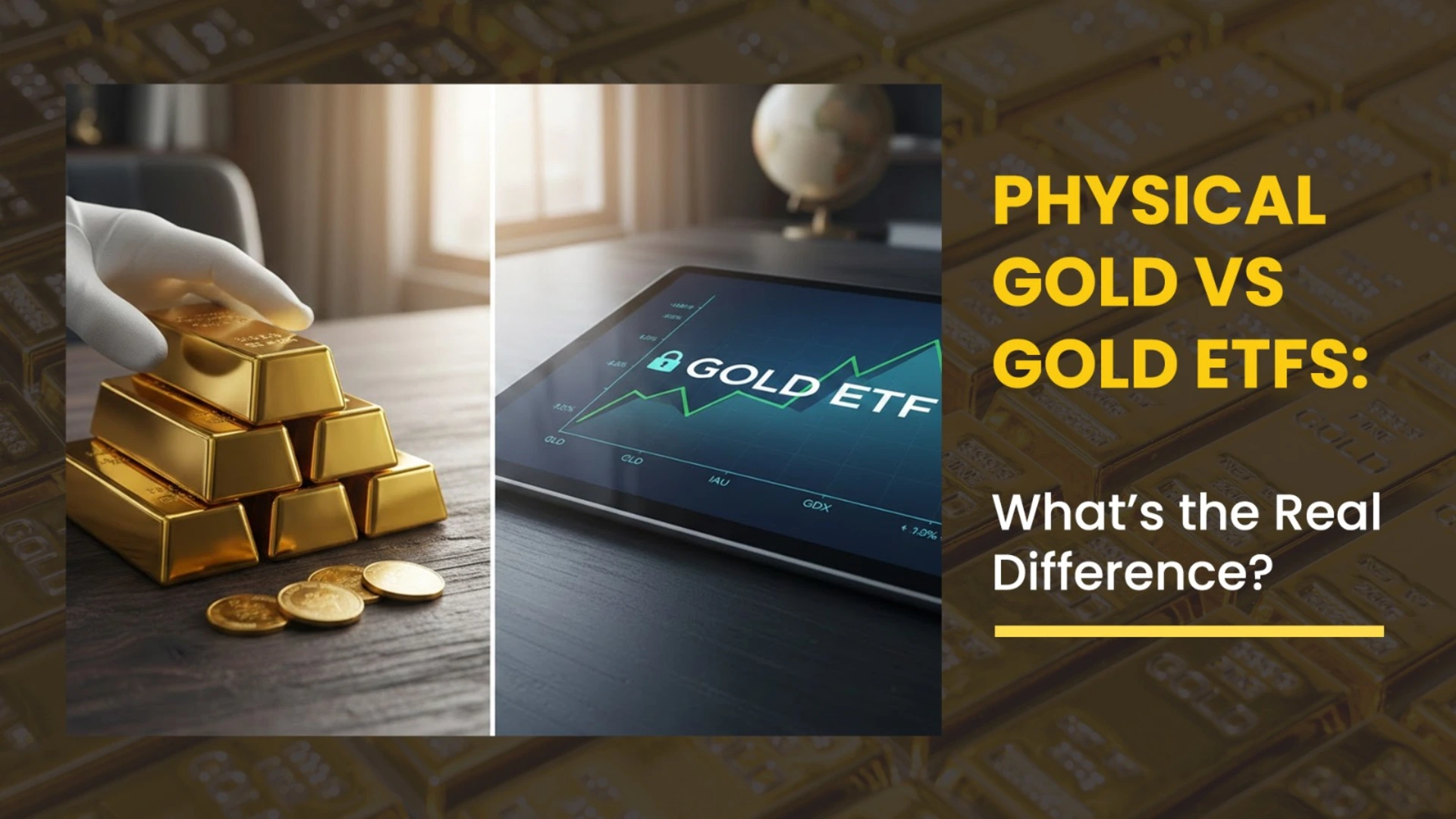
If you are thinking about adding gold to your portfolio, you have probably come across two main choices: buying physical gold bullion or investing through a gold ETF. They both move with the gold price. But once you look closer, they are very different in how they work, how you own them, and what risks are involved.
Let’s break this down in a simple way so you can clearly see your gold investment options and decide what suits you best.
What is physical gold?
A physical gold investment means you are buying real gold bars or coins. This is also known as physical gold bullion. When you’re buying physical gold in Australia, you purchase it from a bullion dealer and either store it yourself or use a professional storage facility.
In this case, you are holding a real, tangible asset. It is not a digital record or a paper contract. It is gold you can physically see and touch.
What are gold ETFs?
Gold ETFs are investment funds you buy on the stock exchange that track the price of gold. ETF stands for Exchange Traded Fund. When you make a gold ETF investment in Australia, you are not receiving physical gold. Instead, you are buying units in a fund that is designed to move up and down with the gold price. So rather than owning gold bars, you own a share in a product that represents gold.
- You buy and sell it through your share trading account.
- The price moves during market hours, just like shares.
- The fund manager handles the storage of gold (if the ETF is backed by physical gold).
- You pay a small annual management fee.
All these features make gold ETFs convenient, especially for people with solid experience in investing in shares.
How do gold ETFs work?
Reading about ETFs may sound technical, but it’s pretty simple to understand. The company that runs the ETF either buys real gold and stores it in secure vaults or uses financial contracts designed to track the gold price. A financial contract, in this case, is a legal agreement that says the value of the investment will move in line with gold.
When you buy units in the ETF, you are buying small pieces of that fund. A “unit” means a share or portion of the fund. If the gold price rises, the value of those units usually rises. If gold falls, the units usually fall too.
The main difference from physical gold is that you never handle the metal yourself. You do not store or insure it. The ETF provider manages all of that behind the scenes.
- You get exposure to gold without handling the metal.
- You can sell quickly during trading hours.
- You rely on the fund manager and financial system to operate normally. With ETFs, you are trusting the system behind the product.
Why do some people prefer gold?
- There is no middle company between you and your gold. It belongs to you outright.
- Once you buy physical gold, there are no yearly fund charges like there are with ETFs.
- If markets or banking systems are shut down temporarily, you still physically own your gold.
- You physically own the gold and can decide where and how to store it safely.
Gold ETFs: Risks and Benefits
There are clear gold ETF risks and benefits, and understanding them in plain language makes decision-making easier.
Pros
- Gold ETFs are easy to buy and sell. If you already have a share trading account, you can purchase a gold ETF the same way you buy shares in a company. There is no paperwork for delivery, no arranging storage, and no handling of metal.
- Another benefit is that you do not need to think about safes, vaults or insurance. The company running the ETF handles storage behind the scenes if the fund is backed by real gold. That removes a layer of responsibility from you.
- Gold ETFs can also be more affordable when starting small. Instead of saving up for a full gold bar or coin, you can invest a smaller amount and still gain exposure to the gold price. This makes it easier for beginners to enter the market.
Cons
- When you invest in a gold ETF, you are relying on the company that manages the fund. This is called relying on a fund manager. They are responsible for running the product properly. While these funds are regulated, you are still trusting that the system works as it should.
- There are also ongoing management fees. These are small yearly charges taken by the fund provider to manage the ETF. They might look minor, but over the long term, they slowly erode your overall return. With physical gold, you usually pay once when you buy. With ETFs, fees continue every year.
- Another risk is system dependence. Gold ETFs are traded on the stock market. If there were ever serious market disruptions and trading were paused, you would not be able to sell until markets reopened. This does not happen often, but it is part of the structure.
Physical Gold: Risks and Benefits
For many Australians, the physical ownership of a precious metal like gold is the main reason they choose this option. But like any investment, it has both strengths and trade-offs.
Pros
- One of the biggest advantages is direct ownership. You own the metal itself. There is no middle company between you and your asset.
- Another benefit is that there are no ongoing management fees. With ETFs, you pay small annual fees to the provider. With physical gold, you pay a purchase premium upfront, which is the extra cost above the market gold price, and that is it. After that, there are no yearly charges just for owning it.
- There is also no counterparty risk, which means you are not relying on a bank, fund manager, or financial company to meet its obligations. The value of your gold does not depend on someone else keeping a promise.
Cons
- You need to arrange secure storage. That could mean installing a home safe or paying for professional vault storage. Either way, security becomes your concern.
- Insurance may also be necessary, especially for larger amounts of physical gold. This adds an extra cost that you need to factor in.
- Selling physical gold is not difficult, but it is not as instant as selling shares online. You need to contact a bullion dealer, agree on a price, and complete the transaction. It is simple, but it takes more effort than clicking a sell button in a trading account.
Gold ETFs vs Physical Gold: A Comparison
This table shows why the gold ETFs vs physical gold decision often comes down to what makes you feel more comfortable in terms of direct ownership and control, or convenience and ease of trading.
| Feature | Physical Gold | Gold ETFs |
|---|---|---|
| Ownership | You own the actual gold bar or coin. It physically belongs to you. | You own units (small portions) in a fund that tracks gold. You do not own the gold directly. |
| Storage | You must organise storage yourself, either at home or in a vault. | The ETF provider arranges storage if the fund holds physical gold. |
| Fees | Usually, a one-time premium is paid when you buy (extra amount above market gold price). | Ongoing annual management fees are charged by the fund. |
| Access / Selling | You sell through a bullion dealer, which may take some time to arrange. | You can buy or sell quickly during stock market trading hours. |
Is Physical Gold Safer Than ETFs?
When people ask, “Is physical gold safer than ETFs?”, the answer depends on what kind of risk you are worried about.
- If your concern is market volatility, both physical gold and ETFs follow the same gold price. They will rise and fall together.
- If your concern is financial system risk, physical gold removes that layer because you own it outright.
So a safer investment is not a simple yes-or-no. It depends on whether you value convenience or independence more.
Gold Secure Physical Gold Options
At Gold Secure, we offer different types of physical gold bullion to suit various investors. These typically include:
- Gold bullion bars – These are rectangular bars of pure gold, available in different sizes such as 1 oz, 10 oz, or 1 kg. Larger bars usually have lower premiums per gram, offering better value for larger investments.
- Gold bullion coins – These are government-minted coins made from pure gold. They are popular because they are easy to recognise and simple to resell.
- Gold nuggets/rounds – Smaller pieces like gold nuggets or rounds allow new investors to begin with a lower amount. These are easier entry points if you are just starting out and want to gradually build your gold holdings.
- Pool-allocated gold: Pool-allocated gold is a way to own gold without having a specific bar in your name. Your gold becomes part of a bigger shared pile of gold stored safely in a vault. You still own a certain amount by weight, but you don’t have to worry about storing or handling the bars yourself. It’s an easy option if you want to invest in gold without dealing with the physical stuff.
Final Thoughts
With Gold Secure’s expansive range of bullions, you have access to a range of physical gold choices, whether you prefer bars or coins, smaller starter amounts or larger investment pieces. The key is choosing the format that fits your budget, storage plan, and long-term goals. To learn more about the best investment options,
📞 Call: 07 4939 0239 or
Visit
Gold Secure – Chermside
- Address: Suite 5/832 Gympie Rd, Chermside QLD 4032
- Email: [email protected]
- Hours: Opening Hours – Monday to Friday: 9 am to 5 pm | Saturday: 10 am to 4 pm | Sunday: Closed
- Details: Located opposite Westfield Chermside, with parking available behind the building and easy access via Hamilton Road.
Author Bio