
 0
0Gold Investment Glossary: 20 Must-Know Terms for Beginners
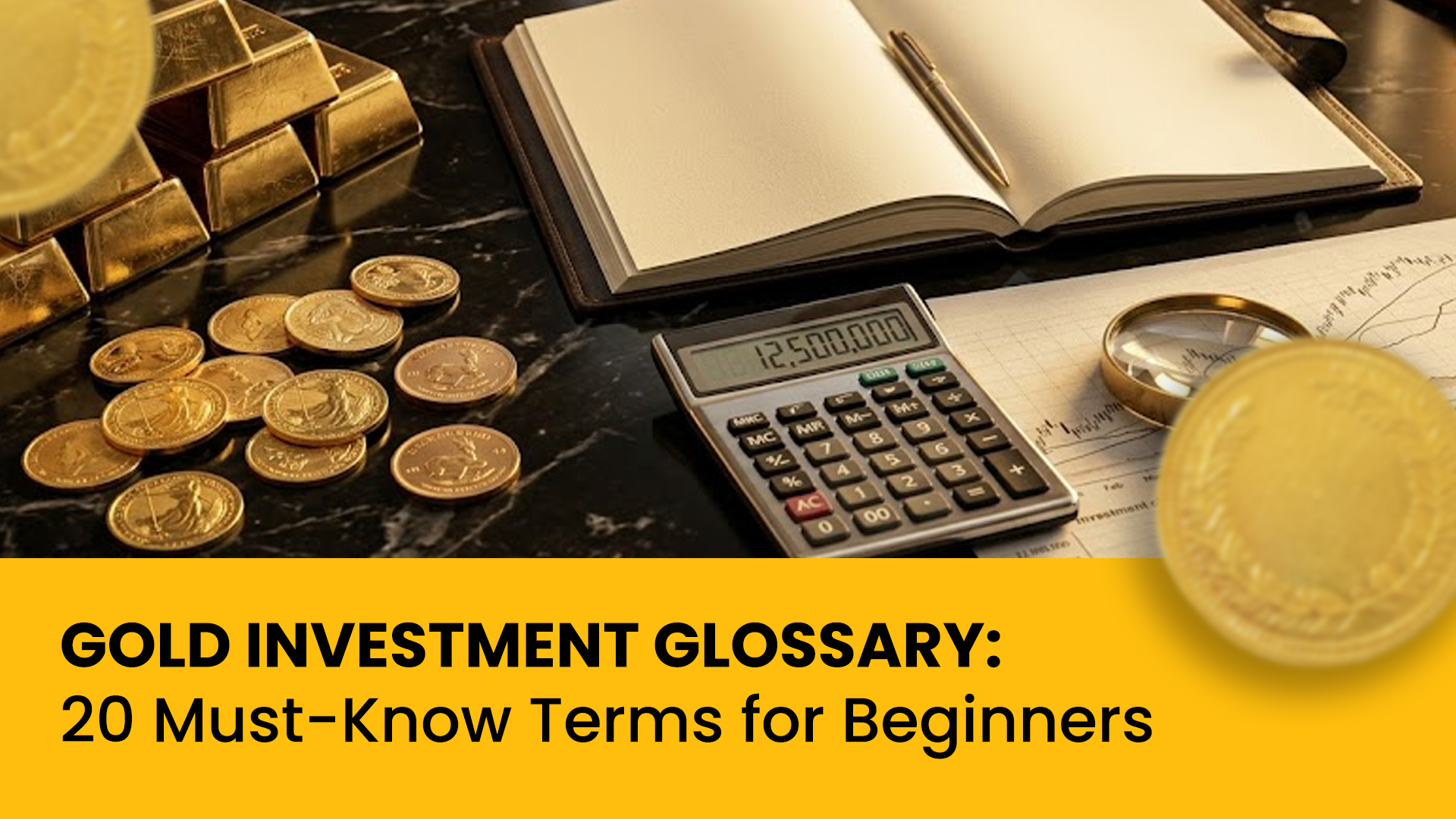
New to gold? No worries, we’ve broken down the technical terms into plain, easy-to-understand English.
If you’ve ever thought about buying gold to protect your savings, diversify your portfolio, or invest in something more tangible than shares, you must have come across terms like spot price, bullion, numismatic value, premium over spot, and other financial jargon. But do you know about all of it?
At Gold Secure, we believe investing in gold should be easy and accessible to every Australian. To help you with a seamless gold investing experience, we’ve put together this glossary of the 20 most important gold investment terms, explained in simple English. Think of it as your “things to know” before you walk into our Chermside store or start browsing online.
1. Payout Rate
Payout rate is the amount a buyer actually offers you per gram, after accounting for purity and the current market price. It’s usually a bit lower than the spot price because it includes refining, handling, and business costs.
For example, let’s say the live gold rate is AUD 100 per gram for pure gold. If your item is 18K (75% pure), its base value comes to AUD 75 per gram. A buyer might then offer around AUD 70 per gram as the payout rate after costs.
So if you have 10 grams of 18K gold, instead of AUD 750, your final payout would be around AUD 700. The key thing is, a good buyer will explain this clearly so you know exactly where your number comes from.
2. Spot Price
If you want to understand how gold pricing works, knowing about the spot price of gold is a must. A spot price is the current global market price of gold, usually quoted per ounce. It changes throughout the day depending on global demand, economic news, and investor activity. Think of it like the “base price” of gold worldwide. Every buyer starts with this number before calculating the final payout.
For example, if the spot price rises in the morning, your gold could be worth slightly more than it was the day before. So the current value of your gold is determined by the live spot price at that time.
3. Troy Ounce (oz t)
Gold is measured and priced in “troy ounces,” a unit of weight that’s a bit different from the regular ounce.. One troy ounce equals approximately 31.1 grams. It’s just a unit of weight like a kilogram, but specifically used for precious metals.
4. Karat (Gold Purity)
Karat tells you how pure the gold in your jewellery is. Pure gold is 24K, while lower numbers like 18K or 14K mean the gold is mixed with other metals. Jewellery is often mixed with metals like copper or silver to make it stronger and more durable for daily wear. That’s why most pieces aren’t 24K. Note that the higher the karat, the more actual gold you have, and the more valuable it becomes per gram. For example, an 18K ring is 75% gold and 25% other metals.
When it comes to bullion and gold bars, most are made from 24K or very high-purity gold, which means they have the highest gold content. This is why bars and bullion are often preferred for investment as they’re simple, pure, and easy to value. Refer to the table below for gold karats and their gold content.
Gold Purity
Gold purity is the exact percentage of gold in your item, usually expressed in karats. It tells you how much of your jewellery is valuable gold versus other metals. Buyers always check this first because two pieces that look the same can have very different purity levels.
For instance, a thick 9K chain might be worth less than a thinner 18K chain because it contains less actual gold. Here’s a table summarising the percentage content of gold in different karats.
| Karat (K) | Gold Purity (%) | What It Means |
|---|---|---|
| 24K | 99.90% | Almost pure gold, very soft, usually used in bullion and bars |
| 22K | 91.70% | High gold content, commonly used in jewellery |
| 18K | 75.00% | Good balance of purity and durability |
| 14K | 58.30% | More durable, lower gold content |
| 10K | 41.70% | The minimum standard for gold in many markets is quite strong |
| 9K | 37.50% | Lower gold content, mixed more with other metals |
6. Premium
Premium is the extra value added to gold items beyond their actual metal content, most commonly seen in coins or branded bullion pieces. This added cost usually comes from design, rarity, minting quality, or brand reputation.
For example, you might buy a gold coin for AUD 1,300 even though the gold inside it is worth AUD 1,200. That extra AUD 100 is the premium you paid for the coin itself, not just the gold.
However, when it comes to selling, most gold buyers focus mainly on the gold content and current market rate rather than brand or collectability.
7. Cast Bar
A cast bar is made by pouring molten gold into a mould and letting it solidify. The result is a chunky, rough-looking bar with a slightly rustic appearance. They’re simple, sturdy, and usually have lower premiums than minted bars.
8. Minted Bar
A minted bar is precision-cut from a flat sheet of gold and then pressed with designs, text, and serial numbers. They’re sleek, uniform in shape, and usually come with a certificate of authenticity in a sealed package. For e.g., Perth Mint bars are beautiful bars featuring sniper-precision cuts.
9. Bullion
Bullion is pure gold in the form of bars or coins, usually bought for investment rather than jewellery. These items are made to high-purity standards and to standard weights, making them easy to buy and sell globally. Unlike jewellery, bullion doesn’t carry emotional or design value. It’s purely about gold content. Bullion usually gets very close to the full market price because of its purity and standardisation.
Most gold bullion comes in 24K (99.9% or higher purity), making it the purest form of gold you can own. It is commonly available as bars (1g, 5g, 10g, 1oz, 1kg) and coins (like 1oz or fractional sizes), giving you options based on your budget and goals.
10. Collectible Coins
Collectible coins are coins that carry value beyond just the gold they contain. This extra value usually comes from rarity, historical significance, limited minting, or strong demand among collectors.
For example, a rare coin might sell for AUD 2,000 even if the gold inside it is only worth AUD 1,200. The extra value comes from its story, scarcity, and collector interest, not just the gold weight.
At Gold Secure, you can invest in well-known coins like the Australian Kangaroo, Gold Sovereign, Krugerrand, or special edition Perth Mint releases. These are recognised globally and carry both gold value and collector appeal.
11. Numismatic Coin
A numismatic coin is a coin that’s valued for more than just the gold in it. Its price can depend on how rare it is, how old it is, its condition, and how much collectors want it. Some coins are bought not just for their metal, but because they’re special or hard to find. That means their value can go up or down based on demand, not just the gold price. So, unlike regular gold coins (bullion), their pricing can be a bit less predictable for beginners.
12. Gold ETF (Exchange-Traded Fund)
A Gold ETF is a way to invest in gold without actually holding any physical gold. You buy it on the share market, just like a stock, and its value moves up or down based on the price of gold. In this case, you’re buying into a pool where someone else holds the gold for you. It’s easy and convenient, but you never actually see or own the gold yourself. That’s why many people still prefer physical gold because it’s something you can hold, store, and fully own in your name.
13. SMSF (Self-Managed Super Fund)
An SMSF is a type of super fund that you manage yourself, instead of leaving it to a bank or large fund manager. It gives you more control over how your retirement money is invested, including the option to buy physical gold. Your super is still for retirement, but you’re the one making the decisions. You can choose to include gold bullion as part of your strategy, as long as you follow the rules. It does come with responsibilities, so it’s important to understand the basics or get the right guidance before you start.
14. Portfolio Diversification
Diversification simply means spreading your money across different types of investments instead of putting it all in one place. This helps reduce risk if one investment doesn’t perform well. If all your money is in shares and the market drops, you feel the full impact. But if you also have gold, it can help balance things out, especially when markets are uncertain. Many people include a small portion of gold in their overall investments for this reason.
15. Collectible Coins
Collectible coins are coins that carry value beyond just the gold they contain. This extra value usually comes from rarity, historical significance, limited minting, or strong demand among collectors.
For example, a rare coin might sell for AUD 2,000 even if the gold inside it is only worth AUD 1,200. The extra value comes from its story, scarcity, and collector interest, not just the gold weight.
At Cash Your Gold, you may come across well-known coins like the Australian Kangaroo, Gold Sovereign, Krugerrand, or special edition Perth Mint releases. These are recognised globally and often carry both gold value and collector appeal.
16. Live Market Rate
This rate is decided by global gold markets, where prices are influenced by demand, supply, currency movements, and economic conditions. It represents the current value of gold at any given moment. So, when you buy or sell gold, the price is based on this live rate and then further calculated depending on the type of gold you have, its purity, and its weight.
Please note that a live market rate of gold reflects real-time changes in the gold market, which means your gold’s value can shift even within the same day. At Cash Your Gold, we calculate the value of your gold based on the live rate and explain how it’s applied.
17. Gold Weight
Gold is measured in grams or ounces, and this directly affects how much you get paid. During the assessment or gold valuation, only the gold portion is counted. Stones, clasps, or other materials are removed from the calculation. Even a small difference in weight can impact your final payout.
Trusted buyers measure the weight of your gold in your presence as a part of their transparent and customer-centric process using a weighing machine.
18. XRF Testing
XRF testing is an advanced and non-invasive way to check the purity of your gold using X-rays, without cutting or damaging your jewellery. The machine scans your precious metal and instantly shows exactly what metals are inside and in what percentage. You can see the results on a screen in front of you.
At Cash Your Gold, we use cutting-edge XRF machines to assay the value of your gold, so your gold valuation is 100% accurate, and you leave our store with a confident deal.
19. Refining
Gold refining, in simplest terms, is the purification of gold from which unwanted components are removed to obtain a purified form that is mostly 99.9% (999) pure gold. Most of the precious jewellery that is made from gold is not pure gold. For instance, jewellery is combined with other metals, such as silver, to make it more solid and wearable.
Refining takes place when the gold cannot be resold in its original form. This gives the opportunity for the gold to become pure, tradable bullion that can be reused again in investment bars, coins, or industrial applications.
In Australia, gold refining must strictly follow set rules to ensure the process is conducted in a way that guarantees accuracy, transparency, and fair valuation.
20. Reselling
Reselling simply means selling your gold item again after you’ve already bought it. This could be jewellery, coins, or bullion that you no longer want or need.
For example, you might buy a gold coin for AUD 1,300 and later decide to sell it when gold prices rise. The amount you receive will depend on the current gold rate, the purity, and the buyer’s payout rate at that time.
It’s important to understand that resale value is usually based on gold content, not the price you originally paid.
Final Thoughts
Understanding these basic gold investment terms makes a big difference when you are starting out. Once you understand how spot prices, premiums, and bullion work, the whole process becomes much clearer.
If you are looking to buy physical gold, Gold Secure can help you get started with clear pricing and a range of bullion options. The key is to take your time, understand the basics, and make decisions that align with your financial goals.
Invest smart with Gold Secure, today!
Planning to buy gold bullion in Australia? Talk to our experts at Gold Secure, who can walk you through current pricing, available sizes, and help you understand what may suit your situation. We do not pressure you to make a purchase; rather, we support you in making a confident investment.
Make your next best investment today!
Get in Touch
If you would like to speak with the team or ask about current gold and silver availability, you can contact Gold Secure directly.
Phone: 07 4939 0239
Email: [email protected]
Address: 5/832 Gympie Rd, Chermside QLD 4032, Australia
Business Hours:
- Monday to Friday: 9 am to 5 pm
- Saturday: 10 am to 4 pm
Frequently Asked Questions (FAQs)
1. What is a gold investment glossary?
It is a simple list of important gold-related terms explained easily, especially for beginners.
2. Why should beginners learn gold investment terms?
It helps you understand how pricing, buying, and selling work, so you can make better decisions.
3. What is the spot price of gold?
It is the current global price of gold per ounce before any extra costs.
4. What does gold bullion mean?
It means physical gold in the form of bars or coins used for investment.
5. What is the difference between karat and carat in gold?
Karat measures gold purity, while carat measures gemstone weight.
6. What is a gold ETF and how does it work?
It is a fund that tracks the gold price. You buy it on the stock market without owning physical gold.
7. What are gold futures and options?
They are financial contracts used to trade gold prices, usually by experienced investors.
8. What is meant by gold purity?
It shows how much of the metal is pure gold, usually measured in karats.
9. What is Hallmark Gold?
Gold that has been tested and certified for purity by an official authority.
10. What is the difference between physical gold and paper gold?
Physical gold is real metal. Paper gold is a financial investment linked to gold.
11. What is a gold sovereign bond?
It is a government-backed investment linked to gold prices instead of physical gold.
12. What does liquidity mean in gold investment?
It means how easily you can sell your gold when needed.
13. What is gold hedging?
It means using gold to protect your money from economic risks.
14. What are the bid and ask prices in gold trading?
The bid is what buyers pay. Ask is what sellers charge.
15. What is inflation, and how does it affect gold prices?
Inflation means rising prices. When this happens, gold often becomes more attractive as a store of value.
Author Bio