
 0
0Gold Price Outlook for 2026 — What Sellers and Investors Should Expect
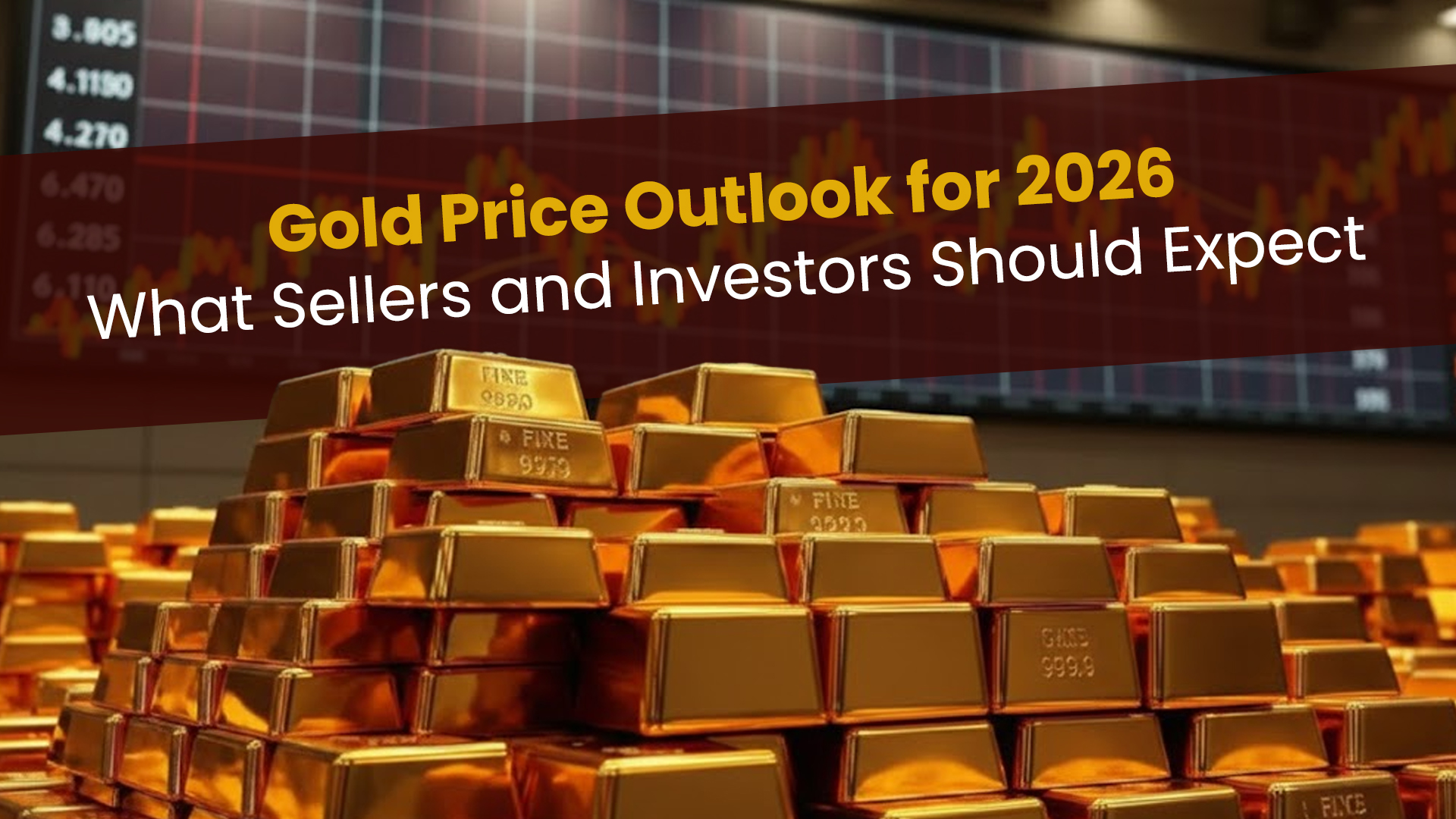
Gold has already surprised many people by moving above USD A$5,000 an ounce. Many older forecasts did not expect gold to rise to this level so quickly. Because of that, a lot of those predictions now look outdated. When prices move this strongly, it can feel confusing for both sellers and buyers. So they invest? Or should they sell their precious metal at a great price hike?
To understand the gold price outlook 2026 or gold price forecast 2026, it helps to step back and focus on the basics. Gold prices move because of supply and demand, and when we deep dive into these two forces, the current gold price forecast for 2026 becomes easier to understand.
Why Gold Prices Have Moved So Strongly
Gold supply is fairly steady and slow-moving. Global mine production usually grows by only about 1 to 2% per year. Opening a new gold mine can take many years, sometimes more than a decade. This means supply cannot quickly increase just because prices are rising.
When gold prices move sharply, it is usually because demand has changed. In recent years, demand has risen strongly. That is a key part of current gold price trends 2026 and an important factor in the broader gold market outlook 2026. If supply grows slowly but demand jumps higher, the only thing that can adjust quickly is the price.
- Central Bank Buying: A Structural Shift
For many years during the 1980s and 1990s, central banks were selling gold to keep a check on prices. Around 2010, that trend changed, and Central banks became net buyers instead of sellers. Since 2022, buying has increased even more, with annual purchases more than doubling compared to earlier years. This is not small buying; it represents large amounts of gold being taken off the market.
Why has demand risen so sharply? Risk is one major reason. When countries saw foreign reserves frozen due to sanctions, it reminded them that assets held in another country’s currency can carry what is called counterparty risk. In simple terms, counterparty risk means relying on someone else to honour their promise. Gold does not depend on another country’s promise. It is a physical asset with no issuer.
This shift from selling to strong buying appears to be long-term rather than temporary. That matters when thinking about the future of gold prices.
- ETF Demand and Investor Behaviour
Another important part of gold price analysis 2026 is investor demand through ETFs. A gold ETF is a fund that allows investors to gain exposure to gold without physically holding bars or coins. When investors invest in these funds, the funds usually purchase physical gold to back the investment.
In the past, ETF demand surged during crisis periods, such as the 2008 financial crisis and during COVID in 2020. After that, demand cooled for several years.
In 2025, ETF demand increased sharply again. In fact, demand levels were similar to past crisis periods. When central bank buying is combined with strong ETF demand, total monetary and investment demand has risen well above long-term averages.
With supply still growing at only 1 to 2% per year, strong ETF demand can place ongoing pressure on prices. This is a major part of the current gold price expectations for 2026.
Structural Forces That May Continue Into 2026
There are a few bigger trends in the world right now that help explain why gold remains in demand and why prices could continue to feel support into 2026.
- Total global debt is above 235% of world GDP
Global public debt is close to or even above the total value of all goods and services produced in the world. This means many countries are borrowing more than they earn, and debt levels are expected to stay high into 2026. High debt can make investors cautious about currencies and bonds. According to the International Monetary Fund’s latest debt data, global debt remains above 235% of world GDP, which shows public debt across the world has risen close to or above the total value of all goods and services produced globally by the end of 2025. In simple terms, governments owe nearly as much as the world makes in a year.
- Government debt alone is around 93% of global GDP
Some large economies have especially high government debt compared to their economic size:
- Japan has around 230% of GDP
- In the United States, around 125% of GDP
- France has around 115% of its GDP
These figures show that many countries are already borrowing a lot compared to the size of their economies. When governments borrow heavily, it can put pressure on finances for years, which can make investors wary of currencies and interest-bearing assets like bonds. Gold often becomes more appealing in that sort of environment because it is seen as a long-standing store of value.
Historical Perspective: What Past Cycles Suggest
History does not repeat exactly, but it can offer perspective. During the late stages of the 1970s bull market, gold rose very strongly in a short period of time. Some of the biggest percentage gains happened near the end of that cycle, not at the beginning.
In 2025, gold rose by roughly 64%, and silver even more. When some analysts compare today’s cycle to the 1970s using long-term charts, they see similarities in momentum.
Based on those comparisons and current supply and demand data, some projections suggest gold could move towards the USD A$8,700 to A$9,000 range before the end of 2026. It is important to note that this is not a guaranteed outcome. It is simply one possible gold price prediction for 2026 based on historical patterns and current demand trends.
What This Means for Australian Sellers
If you have held gold for several years, you may now be sitting on significant gains. The gold market outlook 2026 for Australia may look strong, but selling decisions should depend on your personal financial goals, not just the headline price. You may want to consider whether you need the funds now, how gold fits into your overall portfolio, and whether selling would trigger capital gains tax.
Trying to sell at the exact top is extremely difficult. No one can consistently predict the perfect moment. For many sellers, a balanced approach may involve selling part of their holdings while keeping some exposure.
What This Means for Australian Buyers
For buyers, purchasing gold above USD A$5,000 can feel uncomfortable. It is natural to worry about buying at a peak. One approach some investors use is gradual buying over time, sometimes called dollar cost averaging. This means investing smaller amounts at regular intervals rather than all at once. It can reduce the stress of trying to time the market.
The gold investment outlook 2026 suggests that strong demand and limited supply are still in place. However, prices can still move up and down in the short term. Anyone considering buying should focus on long-term goals rather than short-term swings. It is also important to buy from a reputable Australian bullion dealer like Gold Secure and understand how pricing works, including spot prices and premiums.
Final Thoughts
Planning to buy gold bullion in Australia or silver bullion in Australia? Talk to our experts at Gold Secure, who can walk you through current pricing, available sizes, and help you understand what may suit your situation. We do not pressure you to make a purchase; rather, we support you in making a confident investment.
Make your next best investment today!
Get in Touch
If you would like to speak with the team or ask about current gold and silver availability, you can contact Gold Secure directly.
- Phone: 07 4939 0239
- Email: [email protected]
- Address: 5/832 Gympie Rd, Chermside QLD 4032, Australia
- Business Hours: Monday to Friday: 9 am to 5 pm, Saturday: 10 am to 4 pm
Author Bio