
 0
0Gold vs Silver: Which Precious Metal Is the Better Hedge in 2026?
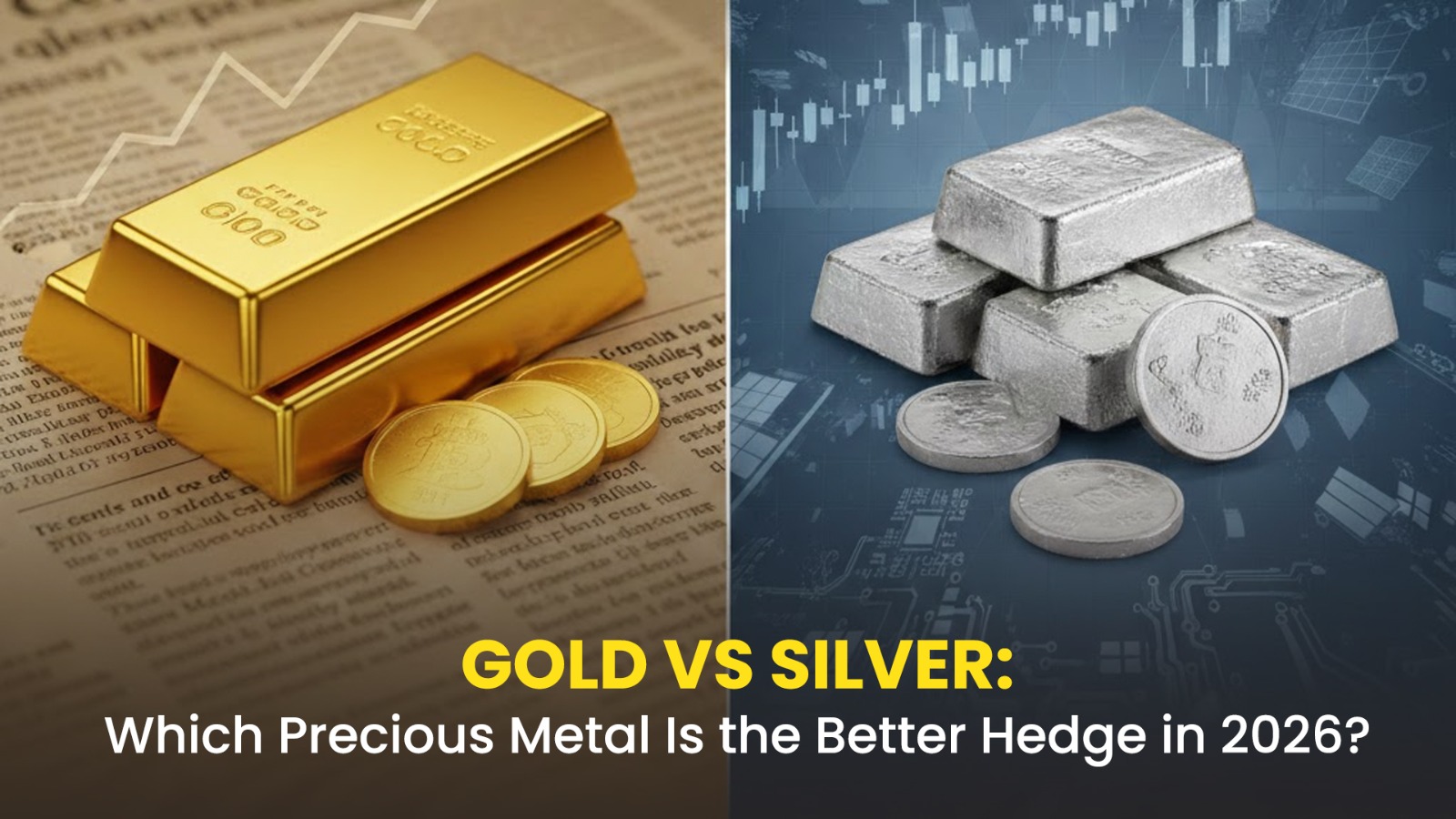
If you are thinking about buying precious metals in 2026, you are probably wondering whether gold or silver is the better choice. Both are popular in Australia.
Precious metals like gold and silver are often grouped, but they are not the same. They react differently to economic changes, inflation, and investor demand. If you are thinking about a gold vs silver investment, this all-inclusive guide will help you to understand how each metal behaves before making a decision.
Key Takeaways
- Gold prices still move, but they generally move in a calmer way compared to silver. Many investors see gold as a steady long-term store of value.
- Silver can rise faster than gold in strong markets, but it can also fall harder during slowdowns. Its price swings are usually bigger.
- Gold holds more value in a small size. You need less space to store $10,000 worth of gold compared to $10,000 worth of silver.
- Silver costs much less per ounce than gold, which makes it more affordable for people starting small.
- Many investors buy gold for stability and silver for growth potential. Holding both can spread risk.
Why People Compare Gold and Silver
When Australians compare gold bullion vs silver bullion, they are usually trying to protect their money from inflation and uncertainty. Inflation simply means prices go up, and your money buys less. A hedge is something people buy to protect against the loss of buying power.
Both gold and silver have been used as stores of value for thousands of years. Today, many people choose to buy gold bullion in Australia or buy silver bullion in Australia to keep part of their savings outside the banking system.
How Gold Works as a Hedge
Gold is called a safe haven asset for its store of value. That means investors tend to trust it during uncertain times.
Gold is commonly used for:
- Investment bars and coins bought by everyday investors
- Central bank reserves, where governments hold gold as part of their national savings
- Jewellery, which makes up a steady part of global demand
- Wealth protection during uncertain times, when investors move money out of shares or currencies
When inflation rises, currencies weaken, or global tensions increase, investors often turn to gold. Unlike silver, gold’s price is less tied to factory output or industrial growth. It does not depend heavily on manufacturing demand (refer to the section below about silver). Because of this, gold usually has steadier price movements compared to silver.
However, gold can still rise or fall depending on interest rates, investor confidence, and global financial conditions. It is not risk-free, but it is generally seen as more stable than silver.
This is why many investors view gold as the foundation of a precious metals portfolio, especially when the main goal is long-term wealth protection.
Gold Price Forecast for 2026
Gold ended December 2025 at around A$4,301 per ounce, up from a low of $1,800 per ounce earlier in the year. For 2026, most forecasts suggest gold will continue to rise, although at a steadier pace. The average AI projections place gold somewhere between roughly A$4,700 and A$5,400 by December 2026. Some of the more optimistic forecasts suggest prices could briefly reach above A$6,000 during the year, while more conservative predictions see gold just crossing the A$5,000 level towards the end of 2026.
Bullion investors surveyed at the end of 2025 are also confident. As a group, they expect gold to average around A$5,136 per ounce in December 2026. Professional analysts are slightly more cautious, with average forecasts closer to A$4,742.
What stands out is that most forecasts agree on one point. They expect gold to remain above A$5,000 at some stage in 2026, assuming global uncertainty continues.
How Silver Works as a Hedge
Silver also acts as a store of value, but it has a strong industrial role. It is used in electronics, solar panels, and many everyday products. This means that factories and manufacturers are major buyers, not just investors.
Silver is commonly used in:
- Electronics such as phones, computers, and circuit boards
- Solar panels are used in renewable energy systems
- Medical equipment, because silver has natural antibacterial qualities
- Electric vehicles and 5G networks, which need silver in their components
As more countries invest in clean energy and new technology, demand for silver could continue to grow. The push towards solar power, electric cars, and digital infrastructure is one of the main reasons many investors see long-term potential in silver.
However, silver depends so much on industry; its price can be affected if the global economy slows down. If factories reduce their operations or construction activity falls, silver demand can drop. When demand drops, prices can weaken.
So while silver can benefit from strong economic growth and new technology, it can also feel more pressure during economic slowdowns. This is why silver tends to have bigger price swings compared to gold.
Silver Price Forecast for 2026
Silver had an even stronger year in 2025, finishing December with an average price above A$63 per ounce after peaking much higher during the year. For 2026, predictions vary more widely than gold. Most AI forecasts suggest silver could trade between A$53 and A$75 by December 2026. Some projections see the metal testing the high $70s during the year.
Private investors are the most bullish on silver. Many believe it could reach $80 per ounce by the end of 2026, with an average forecast of $80.
Silver tends to move more sharply than gold because it has both investment demand and industrial demand. Its use in solar panels, electric vehicles, and electronics continues to grow. That gives it strong upside potential, but it also means prices can be more volatile.
Physical gold vs Physical silver
Here’s a quick comparison of physical gold and physical silver to help you choose.
| Factor | Gold | Silver |
|---|---|---|
| Storage Space | Takes up less space for the same dollar value. You can store more wealth in a smaller area. | Takes up much more space for the same dollar value. Larger investments need more storage room. |
| Weight | Lighter for the same dollar value, making it easier to move and store. | Heavier for the same dollar value, which can make transport and storage more demanding. |
| Buying Costs (Premiums) | Premiums are usually lower in percentage terms, especially on larger bars. | Premiums can be slightly higher in percentage terms, particularly on smaller coins and bars. |
| Ease of Selling | Generally easier to sell large amounts because each bar or coin holds a higher value. | Also, easy to sell, but larger dollar amounts require more pieces due to lower value per item. |
Which is better, Gold or Silver in 2026?
There is no simple answer to which is better, gold or silver, in 2026. The right choice really depends on what you want your investment to do for you and how comfortable you are with price changes.
Buying Gold
- Investing in gold will suit you better if you prefer steadier price movements and fewer sharp ups and downs.
- While gold prices still move, they usually do so in a more controlled way compared to silver.
- If your main goal is long-term wealth protection and you want something that has historically been seen as a safe store of value, gold often feels more reassuring.
- It is also easier to store because it holds a high value in a small size. That means you can store a larger amount of money in less space, which can make storage simpler and more practical.
Buying Silver
- Silver, on the other hand, may suit you if you are comfortable with larger price swings and are willing to accept more movement in exchange for potential growth.
- Silver prices can rise faster than gold during strong economic periods, which can lead to stronger percentage gains. However, they can also fall more sharply when the economy slows down.
- If you believe industrial demand, such as demand from solar panels, electronics and electric vehicles, will continue to grow in the coming years, silver may appeal to you as a growth-focused option.
When comparing gold vs silver investment choices, it is not really about which metal is better overall. Both have their strengths and risks. What matters most is which one fits your financial goals, your time frame, and your comfort level with risk. To answer, which is better, gold or silver, as a hedge against inflation? Some investors prefer the stability of gold, some are attracted to the growth potential of silver, and many choose to hold a mix of both to balance things out.
Final Thoughts
At Gold Secure, our friendly staff guides you in making the best investment. We offer you a range of gold and silver investment options so you can choose what fits your situation. Whether you are new to precious metals or adding to an existing portfolio, our team can guide you through the differences and help you make the right call.
You can buy gold bullion Australia directly from us, including:
- Gold bullion bars in various weights
- Gold bullion coins, such as Perth Mint coins
- Investment-grade gold products suitable for long-term holding
If you are looking to buy silver bullion in Australia, we also offer:
- Silver bullion bars in multiple sizes
- Silver bullion coins, including popular Australian releases
- Bulk silver options for larger investors
We focus on transparent pricing, genuine products, and clear guidance. If you are weighing up gold bullion vs silver bullion, or deciding how much to allocate to each, we are here to help you move forward with confidence.
Get in Touch
If you would like to speak with the team or ask about current gold and silver availability, you can contact Gold Secure directly.
- Phone: 07 4939 0239
- Email: [email protected]
- Address: 5/832 Gympie Rd, Chermside QLD 4032, Australia
- Business Hours: Monday to Friday: 9 am to 5 pm, Saturday: 10 am to 4 pm
Author Bio