
 0
0SMSF Gold Rules Explained: Storage, Compliance & Tax Implications
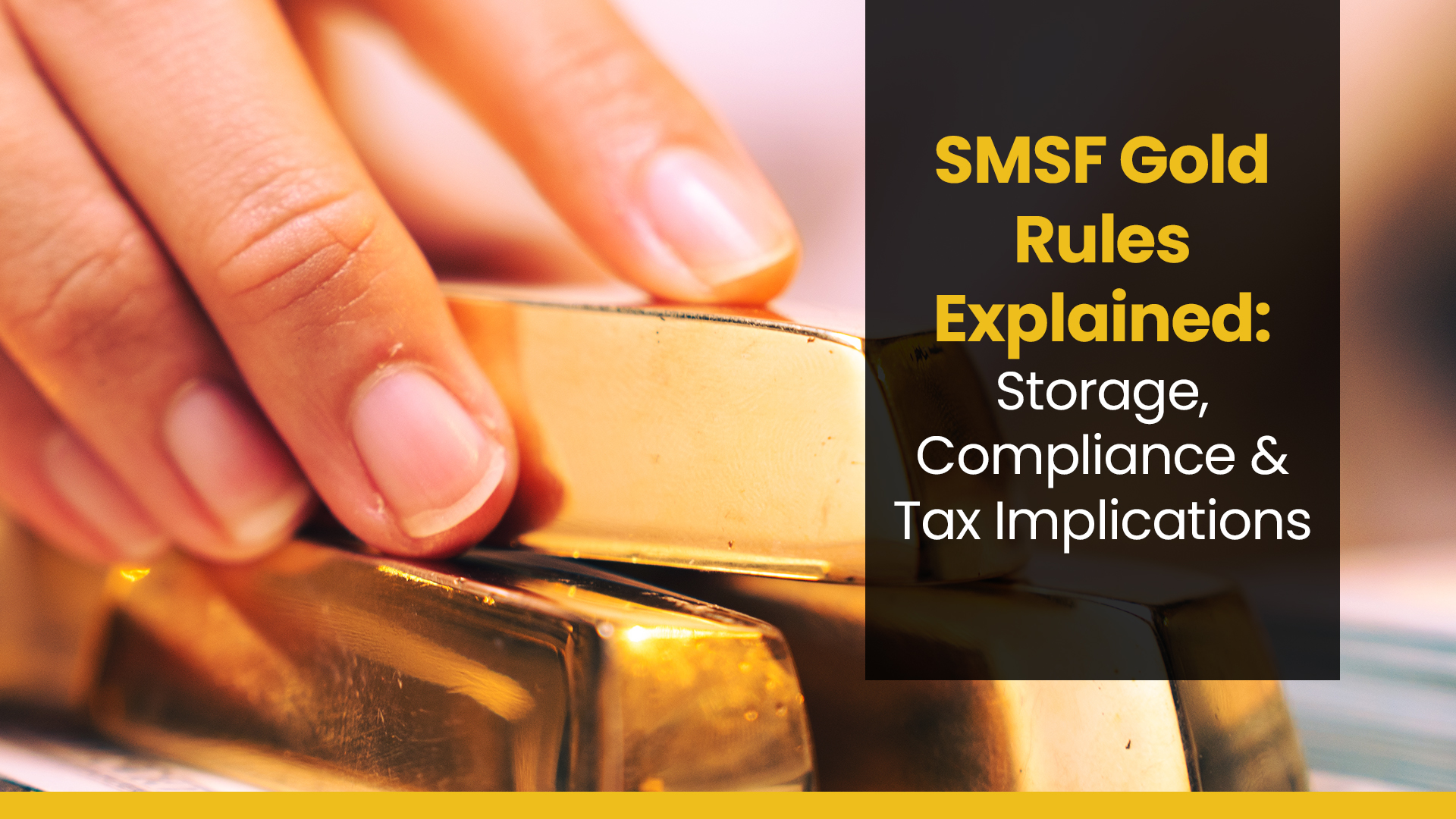
If you are thinking about adding gold to your super, it is important to understand how the rules work first. A Self-Managed Super Fund (SMSF) gives you more control over your investments, but it also comes with responsibility. You are expected to follow certain rules, keep proper records, and make sure everything is done correctly.
Our 101 guide explains SMSF gold rules in simple terms, so you can understand what is required before making any decisions.
What Is an SMSF?
An SMSF is a type of super fund that you manage yourself. Instead of a large company making investment decisions for you, you and the other members of the fund decide where the money is invested. This also means you are responsible for following the rules set by the Australian Taxation Office (ATO). That includes how investments are bought, stored and reported.
Can an SMSF Buy Gold?
Yes, an SMSF can invest in gold, including physical gold like bars and coins. Many people choose gold as part of their retirement savings because it is seen as a long-term store of value. But investing in gold through an SMSF is not the same as buying gold personally. The gold must be owned by the fund, not by you as an individual, and it must follow specific rules.
Running an SMSF comes with real responsibilities. The Australian Taxation Office (ATO), which is Australia’s tax authority, oversees SMSFs, and they have a clear set of rules that trustees must follow. The good news is that the rules around gold are not too complicated once you understand them.
SMSF Gold Rules in Simple Terms
Here are the main rules you need to know, explained as simply as possible.
- First, the gold must be owned by the SMSF, not by you personally. When you buy gold through your fund, the purchase should be made in the name of the fund and paid for using fund money. You can’t buy gold with your personal savings and then transfer it to your SMSF.
- Second, the gold must be kept completely separate from your personal assets. It needs to be kept in a place and in a way that makes it clear this gold belongs to the fund, not to you personally.
*Please note: If you want to store your SMSF gold at home, you need to have proper documentation like purchase records, storage details, insurance information, and evidence that trustees are not personally using or accessing the gold for private benefit.
- Third, you need to keep proper records. That means keeping your purchase receipts, invoices, storage documents, insurance certificates and valuations. Your auditor will want to see them. An auditor is an independent person who checks that your SMSF has been run correctly each year.
- Fourth, the investment needs to fit within your fund’s overall investment strategy. An investment strategy is a written document that explains what your fund is investing in and why it is something every SMSF is required to have. Gold should make sense as part of that strategy, not be a random addition.
SMSF gold storage requirements
This is one of the areas where a lot of people have questions, and it’s worth spending a bit of time on. Under the ATO’s rules for collectibles and personal use assets, you cannot store SMSF gold in a private home. That includes your own home, or the home of any related party of the fund, such as a family member.
- The gold must be stored with a third party, meaning a professional, independent storage provider. This could be a bank vault, a secure precious metals storage facility, or a reputable bullion dealer who offers allocated storage. Allocated storage means your specific gold, your actual bars or coins, is set aside and identified as yours, not pooled with other people’s gold.
- Whatever storage option you choose, it needs to meet a few practical requirements.
- The storage arrangement should be properly documented, meaning you should have paperwork that confirms the fund’s gold is held there.
- The gold should be covered by insurance in the name of the fund.
- And the storage provider should be able to give you regular statements or reports showing what’s held and its current value.
- This matters because when your auditor reviews your SMSF each year, they’ll want to see evidence that the gold exists, that it’s stored appropriately, and that it belongs to the fund. If you can’t produce that evidence clearly and easily, it can create problems for your fund’s compliance.
Why Compliance Matters
Compliance means following the rules set for SMSFs. This includes making sure your investments are properly recorded, stored correctly, and reported each year. If the rules are not followed, there can be penalties or issues with your fund.
For an SMSF, compliance means running the fund according to the Superannuation Industry (Supervision) Act, which is a set of laws that govern how superannuation funds in Australia must operate. When your fund is compliant, it keeps its tax concessions and stays in good standing with the ATO. When it’s not compliant, the consequences can be serious, including penalties, loss of tax benefits, or the fund being made non-compliant.
SMSF Audit Gold Requirements
Every SMSF must be audited each year. An audit is a review done by an independent professional to check that the fund is following the rules.
If your SMSF holds gold, the auditor may ask for proof of ownership, purchase records, and details about where the gold is stored. This is why documentation is so important. Clear records make the audit process much smoother and help show that everything has been done properly.
SMSF Gold Tax Implications
Gold held inside an SMSF is part of your super investment, so it is taxed under superannuation rules. When gold is sold, there may be capital gains tax. This simply means tax on the profit made from selling the gold at a higher price than what you paid. The exact amount of tax depends on the situation of the fund, including how long the gold was held and whether the fund is in the accumulation or pension phase. Because tax rules can vary, it is always a good idea to speak with a financial or tax professional before making decisions.
How to Choose the Right Gold Provider
If you are buying gold through an SMSF, choosing the right provider is important. Here are some key factors to consider when choosing a trusted gold dealer in Brisbane.
- Look for a provider that offers clear pricing, so you understand exactly what you are paying. The pricing should show the market price and any extra costs. You want to know what the premium over the gold spot price is, and whether there are any additional fees for storage or handling. A good provider will be upfront about all of this.
- Security is also important. Whether you are storing the gold yourself or using a vault, you need to be confident that the gold is protected. A good provider should be able to offer or point you toward third-party allocated storage that meets the ATO’s requirements. They should be able to tell you exactly where your gold is held and provide you with regular statements.
- Good reporting is another key factor. You should receive clear trade confirmations, purchase receipts, storage statements, and valuations. This makes audits and record-keeping much easier.
- Choose a dealer who has been operating for a reasonable period of time, has positive reviews from real customers, and is transparent about how they operate. You’re trusting them with a significant asset, so it’s worth doing a bit of homework.
How Gold Secure can help
At Gold Secure, we’ve been helping Brisbane investors buy and sell physical gold and silver for years, and we work with a good number of SMSF trustees along the way. We understand that buying gold through a super fund comes with a different set of questions compared to buying gold personally, and we’re happy to help you work through those questions.
We stock a range of investment-grade gold bullion, including cast bars, minted bars and bullion coins, all certified to 999.9 purity. We can help you understand your storage options, what documentation you’ll need, and how to keep things straightforward and clean for your annual audit.
Please note that we’re not financial advisers, and we’ll always encourage you to get proper professional advice for your specific situation. But if you want a clear, honest conversation about what’s available and how things work in practice, we’re right here in Chermside and always happy to have a chat.
Want to learn more about SMSF Gold Rules? Contact us now, and our staff will guide you to make a confident investment decision.
Phone: 07 4939 0239
Email: [email protected], or visit
1. Chermside (North Brisbane)
- Address: Suite 5, 832 Gympie Rd, Chermside, QLD 4032
- Phone: 07 49 390 234
- Email: [email protected]
- Hours: Mon–Fri: 9:00 AM – 5:30 PM; Sat: 10:00 AM – 4:00 PM
- Details: Located opposite Westfield Chermside, with parking available behind the building and easy access via Hamilton Road.
2. Sunnybank (South Brisbane)
- Address: 6/409 Mains Rd, Macgregor, QLD 4109
- Phone: 07 2142 6862
- Email: [email protected]
- Hours: Mon–Fri: 9:00 AM – 5:00 PM; Sat: 10:00 AM – 4:00 PM
- Details: Conveniently located in the heart of Sunnybank, easily accessible for residents.
3. Brownsplains (South-West Brisbane)
- Address: Unit 3/3376 Mount Lindesay Hwy, Regents Park, QLD 4118
- Phone: 07 2142 6482
- Email: [email protected]
- Hours: Mon–Fri: 9:00 AM – 5:00 PM; Sat: 10:00 AM – 4:00 PM
- Details: Situated along the Mount Lindesay Highway, this location serves the south-western suburbs of Brisbane.
Frequently Asked Questions (FAQ)s
1. What are the rules for investing in gold through an SMSF in Australia?
The gold must be bought in the SMSF’s name, kept separate from personal assets, and recorded properly. At Gold Secure, we help ensure your purchase and paperwork are clear and compliant.
2. Can an SMSF buy physical gold and bullion?
Yes, SMSFs can invest in physical gold like bars and coins. Gold Secure offers bullion products suitable for SMSF investment.
3. What are the ATO requirements for SMSF gold investments?
The ATO requires proper ownership records, secure storage, and accurate reporting. Gold Secure provides documentation to help meet these requirements.
4. Where can SMSF gold be stored legally?
SMSF gold can be stored at home or in a professional vault, as long as rules are followed. Gold Secure can guide you on suitable storage options.
5. Can SMSF gold be stored at home in Australia?
Yes, but strict rules apply, including documentation and separation from personal assets. Many investors choose safer vault storage for easier compliance.
6. What are the compliance requirements for holding gold in an SMSF?
You must follow your fund’s investment strategy, keep records, and ensure proper storage. Gold Secure supports you with clear invoices and guidance.
7. How is SMSF gold audited?
An independent auditor reviews your records each year to confirm everything is correct. Having proper documents makes this process smooth.
8. What documents are required for SMSF gold compliance?
You need purchase invoices, ownership proof, and storage details. Gold Secure provides all necessary documentation at the time of purchase.
9. What are the tax implications of holding gold in an SMSF?
Tax depends on your fund’s situation, but profits from selling gold may be taxed. It’s best to check with a tax professional.
10. Is capital gains tax applicable on SMSF gold investments?
Yes, capital gains tax may apply when the gold is sold at a profit. The rate depends on how long the asset is held.
11. Are there tax benefits of investing in gold through an SMSF?
SMSFs may receive concessional tax rates compared to personal investing. This depends on your fund’s structure and phase.
12. What are the penalties for breaching SMSF gold rules?
Penalties can include fines or loss of tax benefits if rules are not followed. Staying compliant is very important.
13. Can SMSF trustees personally use or access the gold?
No, SMSF gold cannot be used personally. It must remain solely as an investment of the fund.
14. What type of gold is allowed in an SMSF?
Generally, high-purity investment-grade bullion (like 99.5% or higher) is allowed. Gold Secure offers products that meet these standards.
Author Bio