
 0
0Resilience Over Rally: Why Gold and Silver Aren’t Breaking

This week in precious metals: gold and silver were knocked around, but they didn’t crack. They paused, reset, and held their ground.
Gold is trading around A$6,716 per ounce, with silver near A$110.85. That’s not the kind of move that grabs headlines, but it is important: in a week where growth worries, inflation pressure and Gulf tensions unsettled markets, both metals managed to stay on their feet.
This is less about a big breakout and more about resilience.
What Happened This Week
Markets started the week on the back foot. Shares wobbled, bond markets looked jumpy, and precious metals were caught in a sharp early selloff.
Then something interesting happened: instead of sliding into a bigger fall, gold and silver stabilised. Prices stopped dropping, found support and began to move sideways.
Gold: Pullback, Then a Hold
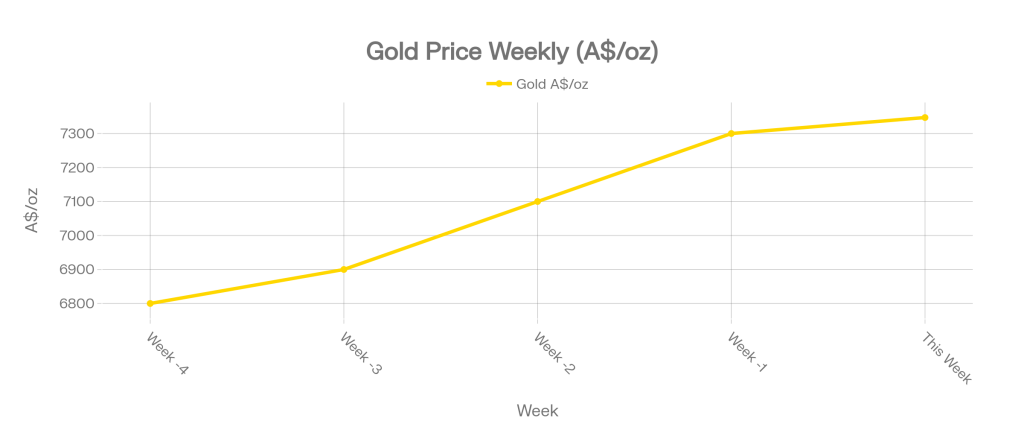
A simple weekly look at gold shows:
- A sharp drop from elevated levels
- A quick bounce from support
- No new lows, no extended panic selling
In other words, the market flushed out some crowded positions, but buyers were still willing to step back in at lower levels.
Silver: Same Story, Bigger Swings
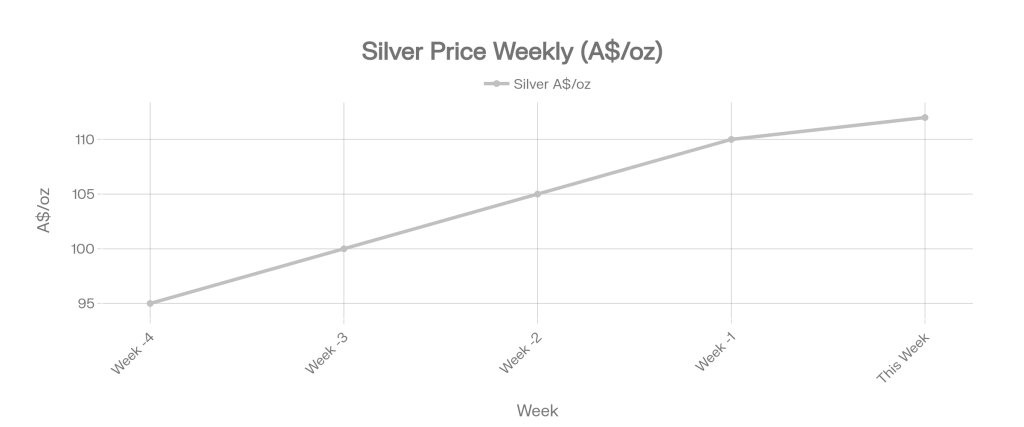
Silver followed the same general path but with much bigger swings:
- It fell harder during the washout
- It stayed more volatile day‑to‑day
- It still managed to hold above key support near the low A$100s
That’s typical silver behaviour. It tends to move further than gold in both directions — stronger on the way up, sharper on the way down.
The Geopolitical Spark
Part of the initial hit came from renewed tension in the Gulf region, which raised fears of a wider conflict. In those moments, markets often move first and ask questions later.
At the same time, there were signs of central banks using gold as a backstop:
- One country sold gold to help support a struggling currency
- Another looked at gold as a way to shore up defence spending
The message is simple: when things get tight, gold is still a go‑to asset. It can be sold quickly to raise cash, or held as a form of protection when other options look shaky.
This week repeated a familiar pattern:
- Stress hits, and gold gets sold because it’s liquid.
- The dust settles, and investors buy it back because its role as a form of insurance hasn’t changed.
Macro Backdrop: Slow Growth, Sticky Inflation
In the background, the economic picture is murky.
Recent data suggest:
- Growth expectations are easing rather than accelerating
- Inflation is still too high for comfort, especially in labour costs
- Central banks don’t have an easy path to cutting rates quickly
Bond markets are feeling the pressure, too. Overseas holdings of government bonds have dropped noticeably, and the move has been fast in recent weeks. That’s a sign that some countries and large investors are raising cash or defending their currencies.
When traditional “safe” assets start to look less safe, hard assets like physical gold tend to benefit.
China, meanwhile, is not expected to be a major extra demand engine this year. Economic targets are modest, and there haven’t been big new stimulus announcements, so the heavy lifting is more likely to come from Western macro and investment flows than from a big new wave of Chinese buying.
How the Metals Have Performed So Far This Year
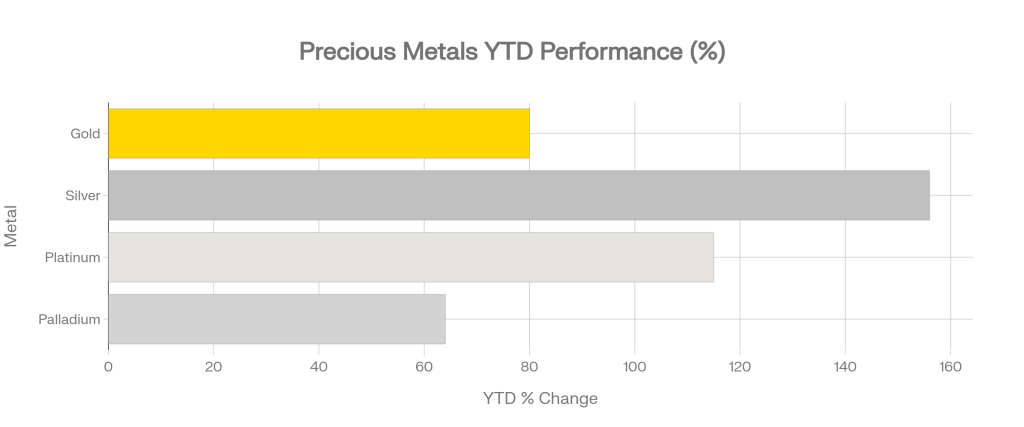
Looking at performance year‑to‑date across the complex:
- Silver has delivered the strongest percentage gain
- Gold has moved higher in a steadier, more controlled way
- Platinum has done better than palladium, reflecting differences in industrial demand
That split tells you something about how the market is thinking: still interested in precious metals, but more selective about where the industrial story looks healthier.
What the Price Action Is Saying
The recent move fits the description of a “washout” rather than the end of the trend.
For gold:
- The price fell sharply from the highs
- It bounced from an area that has acted as support in the past
- Short‑term momentum cooled, but the broader structure is still intact
For silver:
- The fall was steeper in percentage terms
- The rebound has been choppier
- Crucially, it still held above a key zone around A$105
You don’t need to be a chart specialist to read the basic message: buyers were still there on the dip.
For investors, the important levels now look like this:
- Gold:
- Support around A$6,650–A$6,700
- Resistance around A$6,800
- Silver:
- Key floor around A$105
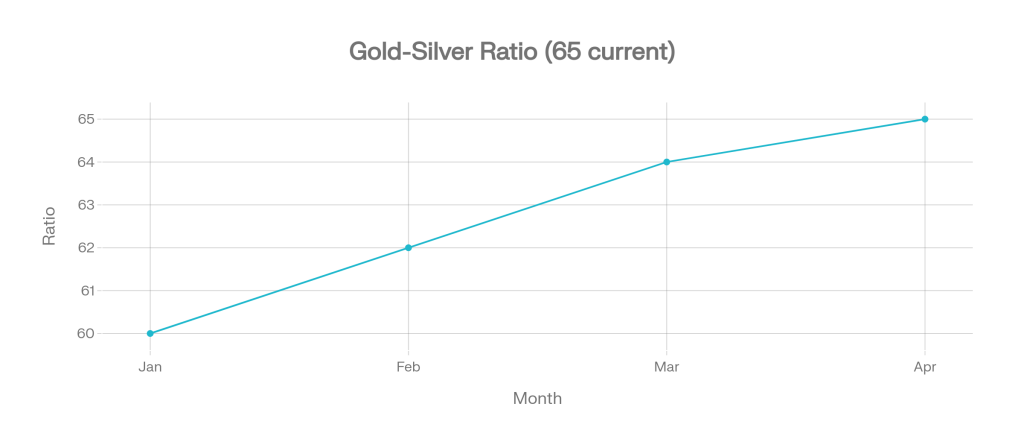
The gold–silver ratio (how many ounces of silver it takes to “equal” one ounce of gold) has widened into the low‑to‑mid 60s. That’s normal during a consolidation phase: gold holds up better, silver lags. Later on, if conditions improve, silver often has room to catch up.
Gold vs Silver: Same Story, Different Style
Gold and silver are telling the same macro story, just in different ways.
- Gold is the steady anchor
- Less volatile
- Supported by long‑term reserve and investment demand
- Treated as a form of liquidity and insurance for portfolios
- Silver is the higher‑beta partner
- Moves more dramatically
- Driven by the same macro forces as gold
- Also tied to industrial demand (solar, electronics, etc.), which adds extra sensitivity to growth expectations
In simple terms:
If you want the calm version of the trade, you look at gold.
If you want a more aggressive expression of the same view, you look at silver.
Platinum and palladium add another layer:
- Platinum, around A$2,992, is being supported by a mix of industrial uses and a gradually tightening supply.
- Palladium, closer to A$2,190, is still weighed down by its link to traditional petrol‑car demand, which is facing longer‑term headwinds.
So across the complex, the market is favouring stability and future‑facing demand over older, more challenged segments.
The Bigger Shift: Gold’s Role Is Quietly Changing
One of the more important themes sitting behind this week’s moves is how gold is being treated inside the financial system.
Industry work is underway to have gold recognised more clearly as a high‑quality liquid asset under banking rules. The argument is that gold:
- Trades in a large, active market
- Is easy to value
- Has a good track record of holding up when risk assets fall
- Can be turned into cash quickly in periods of stress
Right now, banks can hold gold, but it doesn’t fully “count” the way some other liquid assets do. Changing that would make it more attractive as core balance‑sheet liquidity, not just as a trade.
Add that to this week’s signs of central banks using gold for currency defence and strategic funding, and you get a clear message: gold is quietly moving from the edge of the system toward the centre.
What to Watch Next
If you follow gold and silver, the next few weeks will likely be shaped by three main forces:
- Economic data:
- Jobs numbers, wage growth
- Surveys of business activity
- Inflation readings
- A combination of slower growth and stubborn inflation is usually supportive for precious metals.
- Bonds and interest rates:
- If real yields move sharply higher, that can weigh on gold in the short term
- Ongoing selling of government bonds by overseas holders keeps the case for diversification into hard assets alive
- Geopolitics and policy decisions:
- Any escalation in the Gulf or other hotspots can quickly revive safe‑haven demand
- Central‑bank comments or actions around reserves and gold holdings are worth watching closely
From a simple chart‑based point of view, a practical checklist might look like this:
- Does gold stay above A$6,650–A$6,700 on setbacks?
- Does silver hold A$105 and avoid making new lows?
- Does the gold–silver ratio stop widening and start to narrow again?
If the answer is “yes” to most of those, the current phase still looks like a pause within an uptrend, not the start of a deeper downturn.
The Takeaway for Readers
For investors and precious‑metals followers, the message this week is straightforward:
- Gold and silver were tested.
- They were sold for liquidity early in the week.
- They then held key levels and stabilised.
In a world of slower growth, sticky inflation, unsettled bonds and on‑again, off‑again geopolitical tension, that kind of resilience matters. It tells you that the underlying case for physical gold and silver is still intact, even when the market is doing a bit of short‑term housekeeping.
It’s not an “everything is fine” signal — it’s a “this story isn’t over yet” signal.